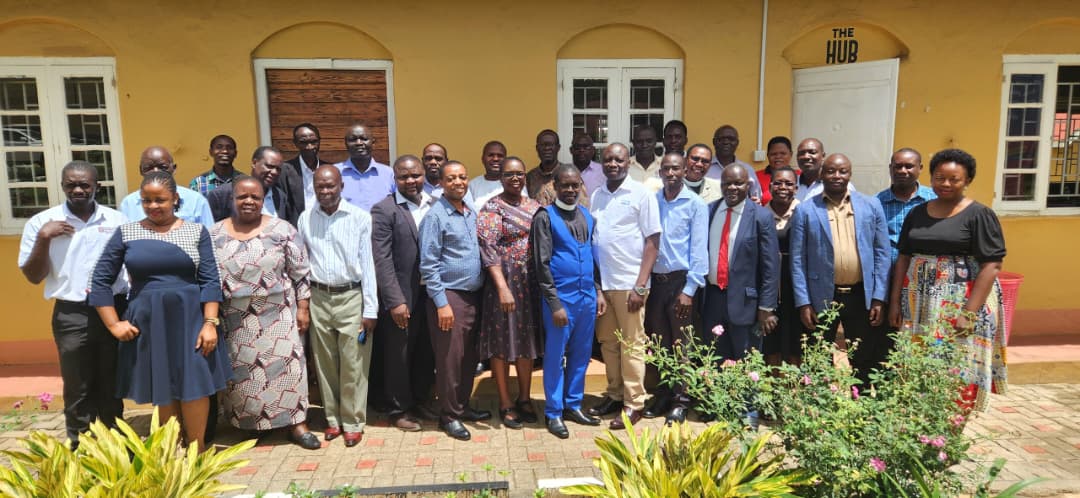
Uganda Christian University (UCU) Mbale University College has concluded a two-day transformational training facilitated by the Institute of Faith in Learning and Service (IFLS), aimed at deepening the integration of faith into teaching, leadership, and institutional practice.
Uganda Christian University (UCU) Mbale University College has successfully concluded a two-day training facilitated by the Institute of Faith in Learning and Service (IFLS), an impactful engagement aimed at strengthening the integration of faith into academic and administrative practice.
The training brought together both academic and administrative staff in a shared learning experience designed to deepen their understanding of holistic Christian education. Facilitated by Rev. Dr. Emmanuel Mukeshimana, the sessions provided a dynamic platform for reflection, dialogue, and practical application of faith-driven principles within the university setting.
Across the two days, participants engaged in a series of interactive sessions, group discussions, and reflective exercises centered on aligning professional responsibilities with Christian values. Key areas of focus included the intentional integration of faith in teaching and curriculum delivery, ethical and servant leadership in administration, and the role of service in shaping both institutional culture and community impact.
One of the major highlights of the training was the emphasis on transformational education, an approach that goes beyond academic excellence to intentionally nurture character, purpose, and spiritual growth among students. Staff were equipped with practical strategies to embed values such as integrity, compassion, accountability, and servant leadership into their daily work. Through real-life scenarios and collaborative learning, participants explored how their roles contribute to shaping graduates who are not only skilled but also morally grounded, purpose-driven, and socially responsible.
For administrators, the training underscored the importance of values-based leadership in decision-making, policy implementation, and institutional development. It challenged leaders to intentionally cultivate environments that reflect fairness, transparency, accountability, and a deep commitment to service. Administrative staff also gained valuable insights into how their support roles directly influence the student experience and the broader fulfillment of the university’s mission.
Academic staff, on the other hand, were encouraged to adopt teaching approaches that intentionally connect faith with disciplinary knowledge. This included fostering meaningful classroom engagement, mentoring students beyond academic instruction, and serving as consistent role models of Christian character. The sessions reinforced the understanding that education at UCU is not only about the transfer of knowledge, but also about the transformation of lives and values.
The IFLS team’s presence at UCU Mbale left a significant and lasting impression, inspiring renewed commitment among staff to pursue excellence anchored in faith and service. Participants expressed appreciation for the practical nature of the training and its strong relevance to their everyday responsibilities and institutional roles.
As the university moves forward, the knowledge and skills gained from the IFLS training are expected to contribute to a more cohesive and purpose-driven institutional culture. Both staff and administrators are now better equipped to advance UCU’s mission of developing holistic graduates who serve with integrity, lead with impact, and contribute meaningfully to their communities.
The successful completion of this two-day engagement marks a significant milestone in strengthening the partnership between UCU Mbale and IFLS, united by a shared vision of advancing transformational, faith-based education.
Compisessions Harry Mukhool