
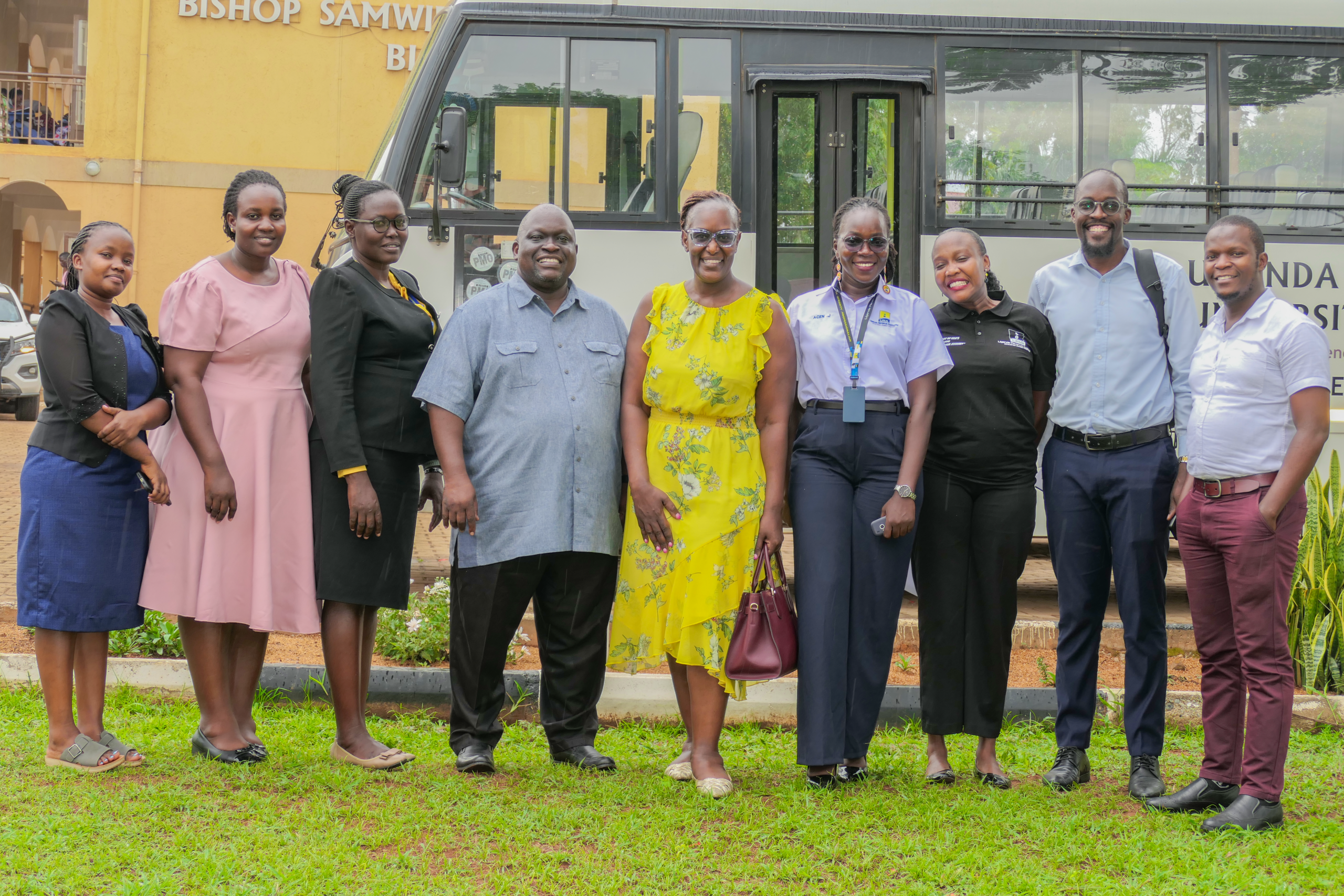

Ms. Myra Iris Ochwo, Assistant Commissioner for Tax Education (Up Country)
Tuesday, 6 October 2026
During URA’s annual client engagement visit, the Assistant Commissioner for Tax Education (Up Country), Ms. Myra Iris Ochwo, commended UCU, Mbale University College for meeting its tax obligations and educating students about their responsibilities.
Speaking to the College Principal, Mr. Vincent Kisenyi, Ms. Ochwo discussed tax education, compliance and opportunities for stronger collaboration between URA and UCU Mbale, where she implored him to continue sensitising staff and students on tax obligations so as to promote voluntary compliance and encourage young entrepreneurs to leverage available tax incentives for business growth.
Ms. Ochwo said tax compliance is essential to national development because tax revenue enables the government to plan, finance public services and improve service delivery.
While speaking with the College Communications Officer and Editor of the College, Harry Mukhooli, Ms. Ochwo responded to some questions. One of them was about incentives for startups and small businesses. Ms. Ochwo said that the 2025–2026 financial policies introduced incentives for new enterprises. Businesses that began operations on or after 1 July 2025, with capital investment of up to Shs500 million, were exempt from income tax for three years.
“Small taxpayers earning less than Shs10 million annually are not required to pay income tax. Businesses could also meet their obligations through formal accounting records or a simplified flat-fee assessment, depending on their circumstances,” she added.
Ms. Ochwo said that tax is not charged when a business makes no profit, and businesses that filed accounts showing a loss do not face a financial penalty. She encouraged early tax education to help young entrepreneurs plan, comply and obtain tax-clearance certificates more easily.
When asked about how to curb the porosity of borders and the swiftness of smugglers at the borders, given that these culprits are protected by locals because they sell them cheap products. She said that URA uses mobile campaign buses, television, radio, community meetings and workshops to reach taxpayers across the country.
“Its regional teams work with local radio stations, local councils and business associations to deliver programmes in local languages,” she explained.
Ms. Ochwo said that URA produces educational materials in almost 13 major languages for sensitisation, and it is also working towards incorporating tax education into the secondary-school curriculum as an examinable subject. The authority is also working to introduce the subject in primary schools and discussing its integration into university courses with vice chancellors.
According to Ms. Ochwo, URA also uses theatre, TikTok, WhatsApp and announcements during church services to reach young people. She clarified that URA’s role is to administer tax laws, while elected leaders are responsible for decisions on public spending and accountability.
Further, a question regarding digitalisation and e-commerce was asked, and Ms. Ochwo replied that URA is modernising its systems to keep pace with digital commerce.
“The authority is transitioning from traditional Taxpayer Identification Numbers to National Identification Numbers, which is a unified identifier for tracking financial activity through bank accounts and digital platforms,” she explained.
Ms. Ochwo also added that URA has teams monitoring the digital economy to ensure that companies earning income in Uganda through online platforms comply with tax requirements.
She added that the authority is researching the use of artificial intelligence and upgrading systems such as E-Tax 2 to improve oversight of modern commercial transactions.
About what URA is doing to tackle smuggling and tax evasion, Ms. Ochwo described cross-border smuggling as a major challenge, particularly where communities protect illicit traders because they buy cheaper goods from them.
“URA is responding through border stations, specialised enforcement teams, mobile tax investigation units and intelligence networks. The authority is also exploring drone surveillance and relying on community informers, although logistical constraints remain,” she added.
Ms. Ochwo added that enforcement operations carry significant risks, noting that recently, URA lost a staff member while pursuing suspected smugglers.
“The authority has combined enforcement with public awareness campaigns to explain to citizens that smuggling reduces national revenue and can undermine public services, including health facilities,” she remarked.
Ms. Myra Iris Ochwo concluded that campaigns target communities that protect traders dealing in illicit goods such as cooking oil and wheat flour.
Story by,
Harry Mukhooli
UCU, Mbale Communications Department